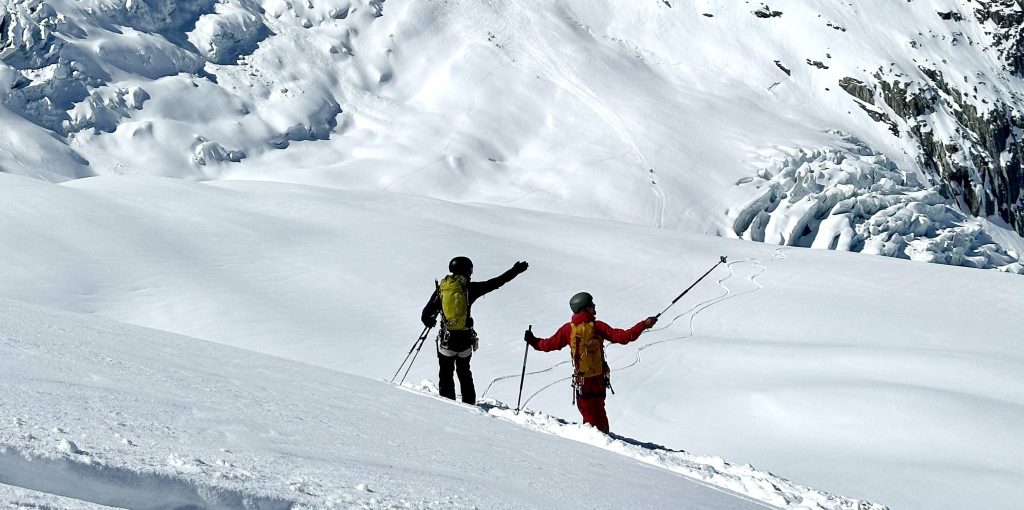
This matter has been troubling me because I feel that getting caught in an avalanche—meaning making a mistake in avalanche terrain—is in some way a taboo subject. In this post, I will explain the chain of events that led to me being caught in an avalanche, reflect on why I feel embarrassed about the incident, as I have made many other mistakes in the mountains, and analyze, why I ended up in the avalanche.
I climbed without a helmet for my first few years of climbing because no one else was using a helmet. Additionally, I climbed long multipitch routes outside of cell phone service, knowing nothing about rope rescue techniques or wilderness first aid. When I started back country skiing, I felt I had a new opportunity to learn things wisely—not through luck and mistakes, as ultimately happened in this case.
Getting caught in an avalanche embarrasses me for three reasons
Getting caught in an avalanche usually results from some sort of decision-making process. I teach decision-making skills at the Humak University of Applied Sciences and, in my role as a safety manager, I am responsible for the safety of both customers and employees at a climbing gym. Therefore, making decisions, teaching decision-making, and managing safety are my profession. I’ve found it difficult to admit to myself that I made poor choices and failed the decision making process.
Secondly, I’m embarrassed that I didn’t have an avalanche pack on the day I got caught in the avalanche. I’m even a little angry at myself for this. I have certain principles that guide how I operate in the mountains, and I take pride in thinking that I make decisions that align with my willingness to take risks. One of these principles is the use of an avalanche pack. I always carry one when I’m in avalanche terrain because it reduces the likelihood of getting buried if an avalanche occurs.
However, an avalanche pack is significantly heavier than any other backpack. Many times, I could have justifiably left it behind, but I’ve thought that the extra weight is good extra training. On the day I got caught in the avalanche, I had left the avalanche pack at home because I didn’t feel like carrying it due to its weight.
As a third point, I’m embarrassed about how we got caught in the avalanche. It wasn’t just me; three out of four of us were caught in the avalance.
We changed our plan on the fly and so changed the slope angle and its aspect
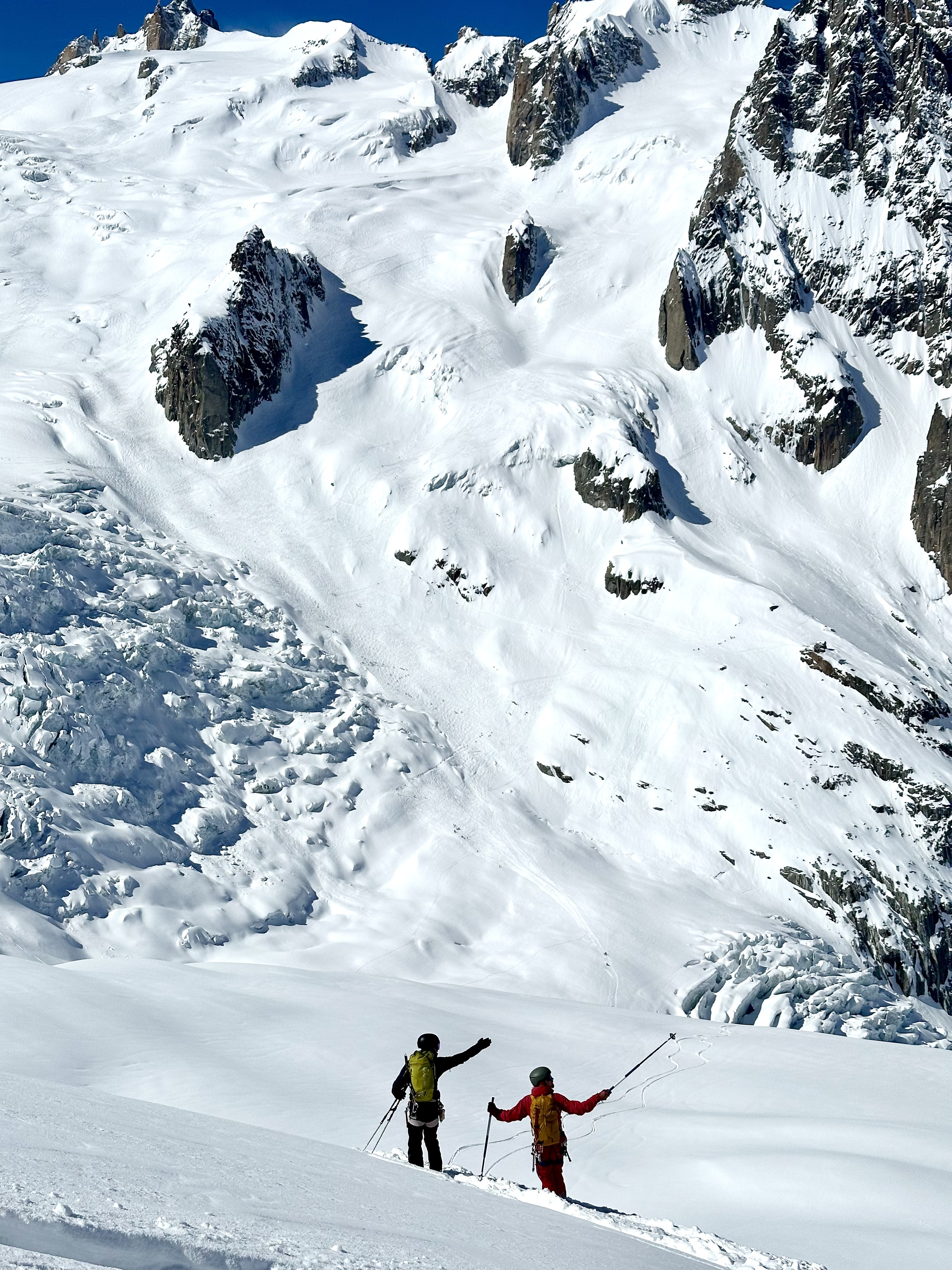
We were in Chamonix skiing down from the Améthystes Glacier to the Argentières Glacier. The day’s goal was to take an easy ski tour along an avalanche-safe route because the conditions were challenging. But we made the decision to deviate from our original avalanche-safe plan and take a more direct and faster, but steeper, route down. We ended up on top of a 35 degree slope of approximately 70-meter-long, leading down to the flat Argentières Glacier.
As a result of the decision, we were now an a dirrefet aspect and on our way to steeper terrain. Our first mistake was that we didn’t discuss things enough.
With hindsight, it’s easy to say what we should have done
We should have stopped to discuss what new hazards we were exposing ourselves to: identifying the avalanche problem of the new aspect and looking for signs of wind slab. Based on our observations, we should have talked about how to reduce the likelihood of getting caught in an avalanche on our chosen new route.
We might have concluded that we have a wind slab on top of an icy surface and that the slope is large and steep enough for a size 1-2 avalanche. We would have noted that an avalanche was very likely, and the likelihood of getting caught in one could have been reduced by only way: by returning to the original avalanche-safe route.
However, since we decided to continue, we should have discussed how to reduce the severity of the consequences if someone got caught in an avalanche. We might have ended up choosing the tactic of skiing one by one. This tactic had already been used once earlier on the route. Why didn’t we discuss it now?
Underlying reasons for the sequence of events (read all my excuses)
There were four of us up there that day so there are four stories about the course of events. The one I’m telling is based on my memories and notes, which are influenced by many factors. I may have also forgotten something. My friends read this post, and based on that, I added one observation to the description of the events.
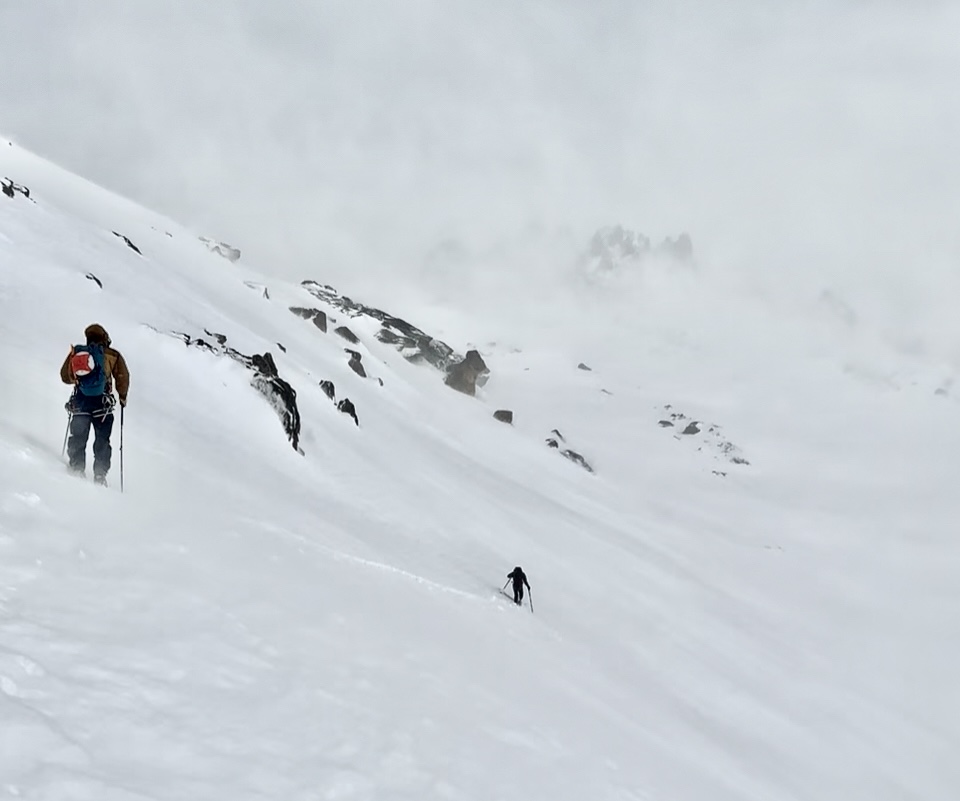
We saw the bottom of the glacier about 70 meters away, and I thought to myself that its right there. The place felt small and my alarm bells didn’t ring at all.
I also recognize that just before we triggered the avalanche, I felt tired of being in that place. I was tired of the wind and poor visibility; tired of being there for longer and stopping once more for decision-making. I was impatient and wanted to get out of the situation I was in. I know very well that when basic needs aren’t met, decision-making ability declines. I was eager to get down and failed to recognize how my state of mind was impacting my judgment.
Due to the limited visibility, we skied in close proximity to each other so we could see one another.
When the avalanche (wind slab) triggered and swept down the slope we were on, only one of us was at a safe sopt above the avalanche’s starting zone.
What went wrong in a nutshell
Based on my present understanding, we made three mistakes:
- We proceeded into avalanche terrain and triggered an avalanche without identifying and communicating as a group that an avalanche was likely, if not certain, in that location.
Because we did not identify the avalanche hazard and/or because we did not communicate anough, we did not take any action:
2. to reduce the likelihood of being caught in an avalanche, for example, by choosing an alternative route and
3. to reduce the severity of the consequences of an avalanche for us skiers, for example, by descending one at a time.
While in the avalanche, I felt as if I were in a little boat navigating through powerful swells
Just before the avalanche, I was waiting in place while two of my friends were skiing ahead of me. A third friend was above me. I could have safely waited where I initially was, behind a rocky outcrop. However, I couldn’t see very well down the slope, so I skied a couple of meters forward, which took me into the avalanche starting zone. I was waiting when I felt myself losing balance. One of the skiers below me also mentioned making a mistake in choosing a safe spot.
It felt as though I had been thrown into a boat on a stormy sea. I realized I was in an avalanche, and for a few seconds, an overwhelming sense of surrealness washed over me. I remember thinking that this was impossible.
When the compacted hard snow began to move beneath me, I managed to turn my skis diagonally toward the edge of the avalanche and slid out of the path of the avalanche. If I had stumbled and fallen, I would have stayed in the avalance. Despite escaping the avalanche, I didn’t feel any sense of control while navigating out from it. I kept watching what was happening to my two friends: they were swept toward the bottom of the glacier. When the avalanche stopped, I saw that neither of them had been buried.
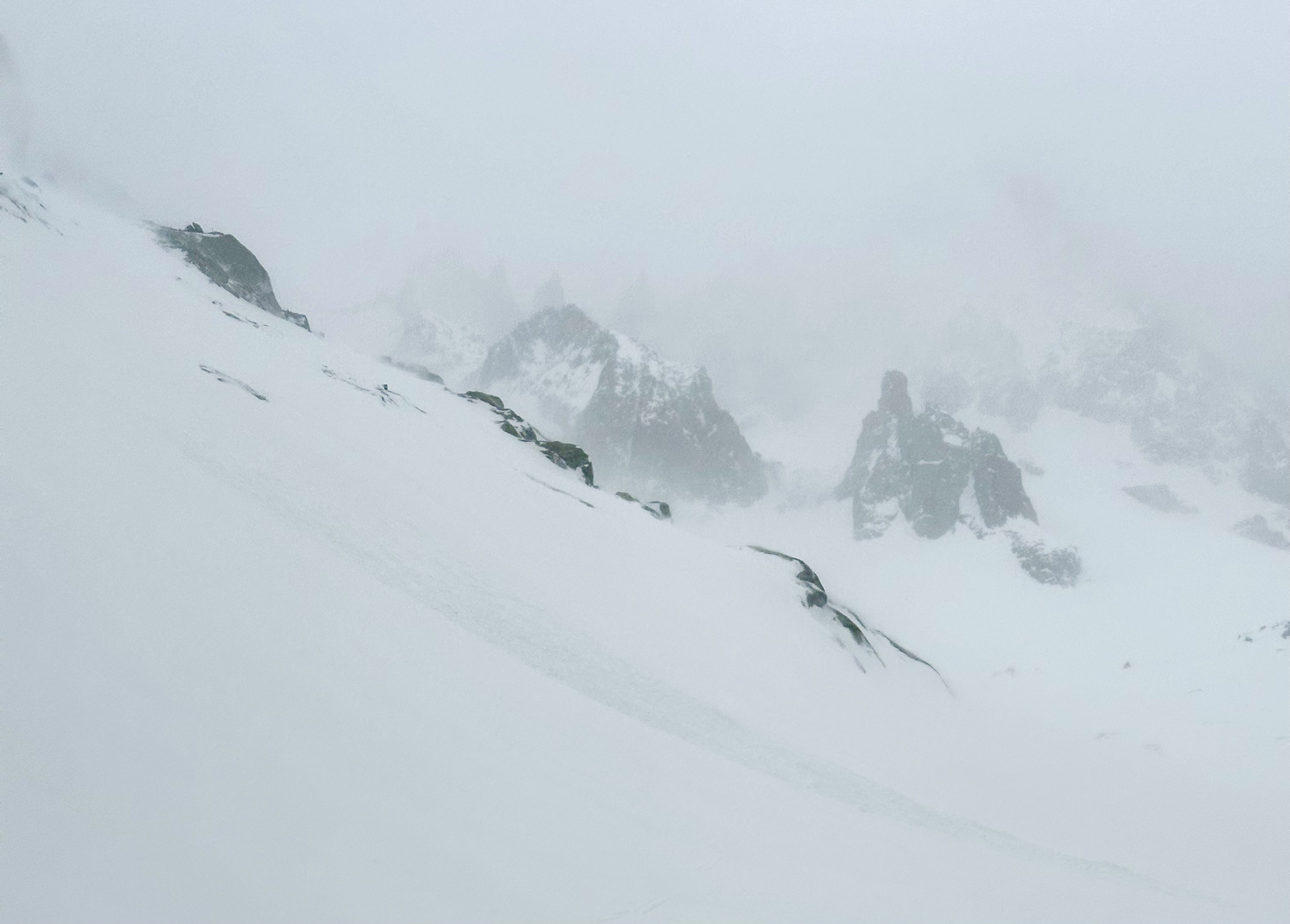
Visibility was only 5 meters at times. I remember instinctively shouting that no one should move until we could see each other again. We waited for a moment for visibility to return and skied down the avalanche path. We waited at the bottom of the glacier to see the path left by the avalanche from a distance, and I took a photo of it. I estimated that the avalanche was a small size 2. However, it’s difficult to assess this because visibility was poor, and the crown of the avalanche is not visible in the photo.
I find it important to share this story so that others can learn from my mistakes
I process accident data at the climbing gym on a weekly basis: every Monday, I read the accident reports. For each recorded incident, I consider whether anything could have been done to reduce the likelihood of the accident and/or the severity of its consequences in the future. I compare the description of the accident to previous incidents and try to identify common factors among the accidents. Measures to reduce operational risks are updated based on information gathered from near misses and accidents.
Getting caught in an avalanche is an event that I need to share as openly as possible, based on my professional expertise, so that all my friends have the opportunity to learn from what happened.
Perhaps this story also provides information for those who teach avalanche safety professionally: this shows how a recriational skiers can end up in an avalanche even when the group has knowledge and skills, has attended courses, and consists of familiar skiers. I committed the very mistakes that the courses explicitly warn about.
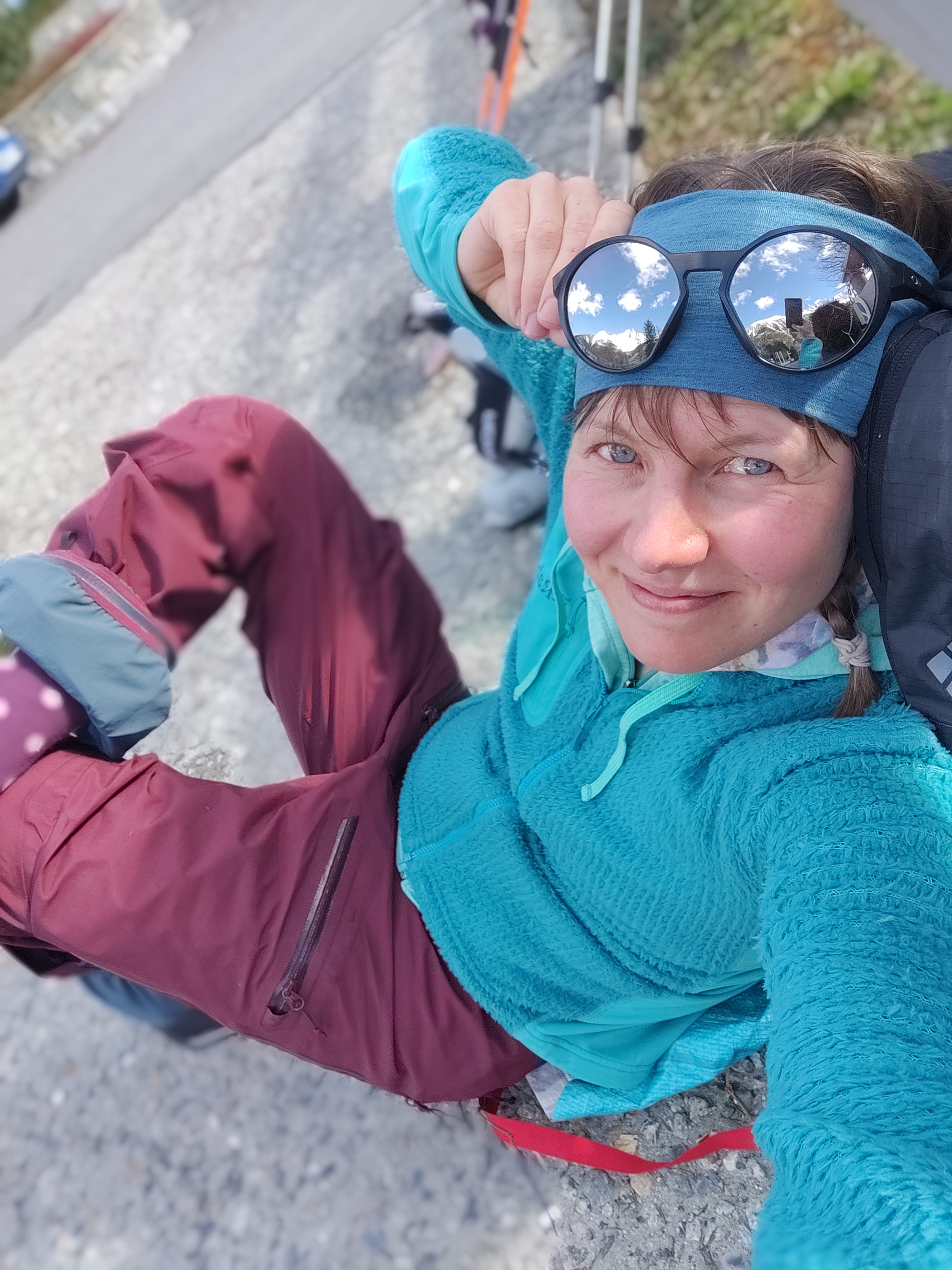
Lessions learned: Reflection of the events with my skiing friends and myself
We analyzed what happened afterwards, and I believe that we are all wiser as a result of it. I feel fortunate to have been with these three skiers, as reflecting on the events afterward felt easy and safe. We considered how the challenging conditions that day, the terrain, and our group’s skills and dynamics contributed to the chain of events. We also discussed the heuristic traps or the pitfalls of decision making.
My motivation to continue the trip in challenging conditions was influenced by my goal of compiling a list of glacier ski tours for the application for the mountain guide school. I knew that this trip would earn me a tick on a list. I recognize the trap of becoming fixated on a goal, but I don’t believe I would have done anything differently if given the chance.
I hope this text encourages open discussion on this topic. And not just when things go wrong but anytime we expose ourselves to risks.
Wishing you wise decision-making and safe ski tours.
Emma
 Emma climbs rocks